Is Professional Teeth Whitening Worth It
January 26, 2026
When Invisalign May Not Be the Right Option
February 23, 2026You brush, you floss, and you try to stay consistent—so hearing that there’s still buildup on your teeth can feel confusing. If your teeth look clean, why would anything still be there?
The answer lies in how plaque forms and how quickly it changes. Some buildups are not easy to see, and once it hardens, it cannot be removed at home. This is where dental cleaning in Charlotte becomes an important part of maintaining your oral health.
Why Plaque and Tartar Can’t Be Fully Managed at Home
What Plaque Is and Why It Builds Up Daily
Plaque is a soft film made up of bacteria that constantly forms on your teeth. It develops after eating and drinking, especially when sugars and starches are present. These bacteria produce acids that settle along the tooth surface and near the gums.
Even with good brushing habits, plaque can collect in tight spaces—between teeth, along the gumline, and around dental work. These areas are harder to reach, which allows buildup to remain even after daily cleaning.
How Plaque Changes Once It Stays Too Long
Plaque does not stay soft for long. Within 24 to 72 hours, it can begin to harden as it interacts with minerals in saliva. This process turns it into tartar.
At this stage, the texture changes. What was once a soft film becomes a firm deposit attached to the tooth. Brushing and flossing are no longer enough to remove it. This is often where patients feel like they are doing everything right but still notice buildup.
Why Tartar Creates Ongoing Challenges
Tartar is not just hardened plaque; it also creates a surface that attracts more bacteria. Its rough texture makes it easier for new plaque to attach and build up faster.
This often leads to a cycle in which buildup becomes increasingly difficult to manage at home. Tartar tends to form near the gumline, which can affect how the gums respond over time, especially if it is not removed.
Why Professional Removal Is Necessary
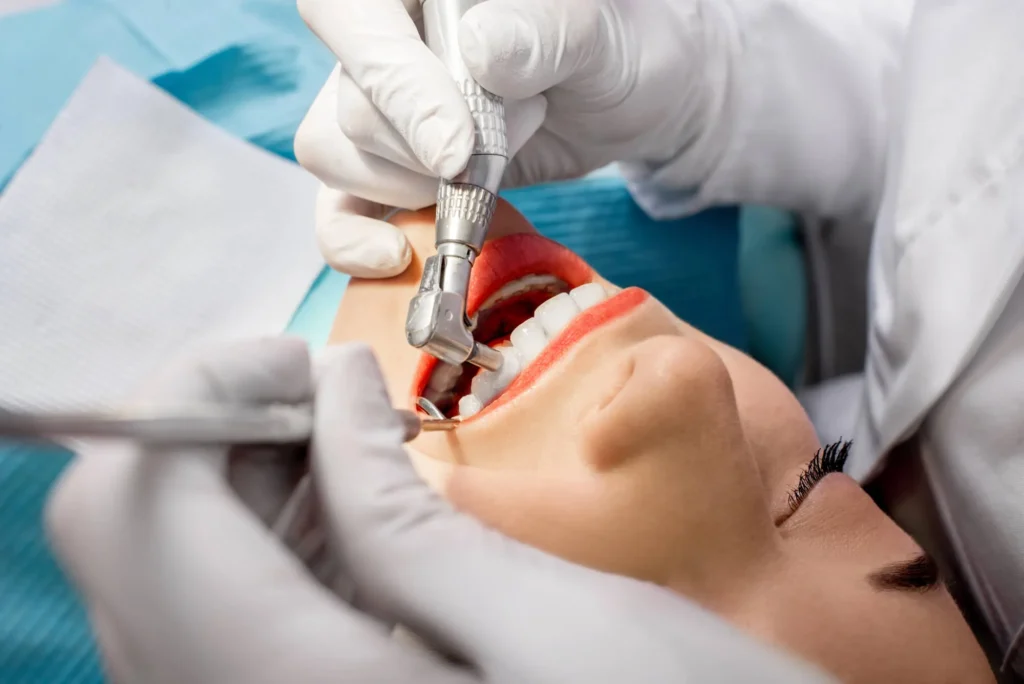
Dental professionals use instruments designed to safely remove tartar from the teeth. These tools can reach areas that are difficult to clean with a toothbrush or floss.
The process also smooths the tooth surface. This makes it harder for plaque to attach again and helps you maintain a cleaner feel after your visit. Without this step, tartar would continue to build and become more difficult to manage over time.
How Regular Cleanings Support Long-Term Oral Health
Routine dental cleanings are not only about removing buildup. They also provide an opportunity to monitor changes in your oral health.
Your dental team can check for early signs of gum irritation, changes in tooth structure, or areas that may need more attention. Addressing these early helps maintain comfort and reduces the chance of more involved treatment later on.
Ready to Schedule a Dental Cleaning in Charlotte for Healthier Teeth and Gums?
Brushing and flossing are essential, though they are only part of the picture. Professional cleanings help manage what daily care cannot fully remove.
At Cedar Walk Family and Cosmetic Dentistry, care is centered on prevention, comfort, and clear communication. The team focuses on helping you maintain healthy teeth and gums through routine exams and cleanings in a welcoming environment.
If it has been a while since your last visit, or you want to stay consistent with your care, scheduling a dental cleaning can help support your long-term oral health.
Practice Recognitions

Recent Posts
- Dental Cleaning vs. Deep Cleaning: What’s the Difference?
- Can You Whiten Sensitive Teeth? What You Should Know
- What Happens to Your Natural Teeth Under Veneers?
- Why Preventive Care Is the Foundation of Family Dentistry
- How to Decide Which Cosmetic Dental Treatment Is Right for You
- Why Seeing the Same Dentist Has Long-Term Benefits
- Root Canal Myths: Does It Hurt? What Modern Treatment Is Really Like
- What Makes Some Veneers Look More Natural Than Others
- How Healing Progresses After a Tooth Extraction
- How Long Does Invisalign Take? Timeline + What Impacts Results