


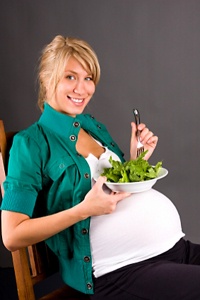
<from Mouthhealthy.org>Now more than ever, it’s important toeat a well-balanced diet. That’s because what you eat during your pregnancy affects the development of your baby, including the teeth. A baby’s teeth begin to develop between the third and sixth months of the pregnancy. A sufficient quantity of nutrients—especially vitamins A, C, and D, protein, calcium and phosphorous—are needed. Making smart food choices now can help set your child up to be Mouth Healthy for Life.What to Eat:According toMyPlate, a website from the Center for Nutrition Policy and Promotion, an agency of U.S. Department of Agriculture, a balanced diet should include:
- Fruits and vegetables. Combined these should be half of what you eat every day.
- Grains. Make sure at least half of the grains you eat are whole grains, such as oatmeal, whole wheat bread and brown rice.
- Dairy. Choose low-fat or fat-free dairy foods.
- Lean proteins. Make lean protein choices, such as lean beef, skinless poultry and fish. Try to vary your protein choices to include eggs, beans, peas and legumes, too. Eat at least 8 oz. of seafood a week.
In addition to maintaining a healthy diet,you should try to resist the urge to snack constantly. While it’s normal for pregnant woman to have the desire to eat more, frequent snacking can be an invitation to toothdecay. When youdo snack, choose foods that are nutritious for you and your baby such as raw fruits and vegetables, yogurt, or cheese, and make sure to follow your physician’s advice regarding diet.To assist you in making healthy eating choices, the National Maternal and Child Oral Health Policy Center has compiled a list of tips to follow during pregnancy that can be foundhere.