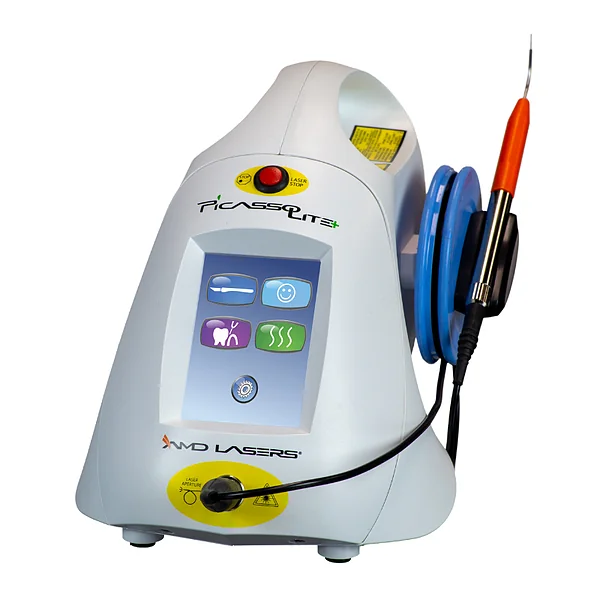
Laser instruments emit a thin, concentrated beam of light energy. Light is calculated in wavelengths, and each wavelength generates an individual thermal output, so dentists can predict its interaction with a particular tissue. Consequently, some wavelengths are more conducive to performing certain procedures than others.
Lasers assist in removing tissue from a partially exposed wisdom tooth, gum tissue that has overgrown due to certain medications, inflamed gum tissue, muscle attachments that restrict tongue or lip movement, and small amounts of tooth enamel. It is also used to accelerate in-office tooth whitening procedures, reduce the discomfort from cold sores and cankers, prepare tooth enamel for composite bonding, repairing certain worn-down fillings, and remove and reshape bone and gum tissue during crown lengthening procedures.
There are many benefits of a dental laser, which include:
- There is potentially a decreased need for sutures with soft tissue lasers.
- Bleeding is minimized in treated soft tissues, as the laser promotes blood clotting.
- With some procedures, anesthesia is unnecessary.
- The chance for bacterial infections is lower because the laser sterilizes the area.
- Wounds can heal faster, and it’s possible for tissue to regenerate.
- The procedures may involve less damage to the surrounding tissues.