Dental Implants – Complete Guide for Patients in Charlotte
September 15, 2025
Top 5 Foods for Healthy Gums
November 1, 2025Key Takeaways:
Plaque and Tartar Buildup:
The #1 cause of itchy gums and gum disease.
Other Causes:
Allergies, hormone changes, dry mouth, bruxism, or healing cuts.
Warning Signs:
Redness, bleeding, swelling, persistent bad breath, or loose teeth.
Treatment & Relief:
Good hygiene, saltwater rinses, antihistamines, and professional cleanings.
Prevention:
Daily brushing, flossing, routine dental exams, and quitting smoking.
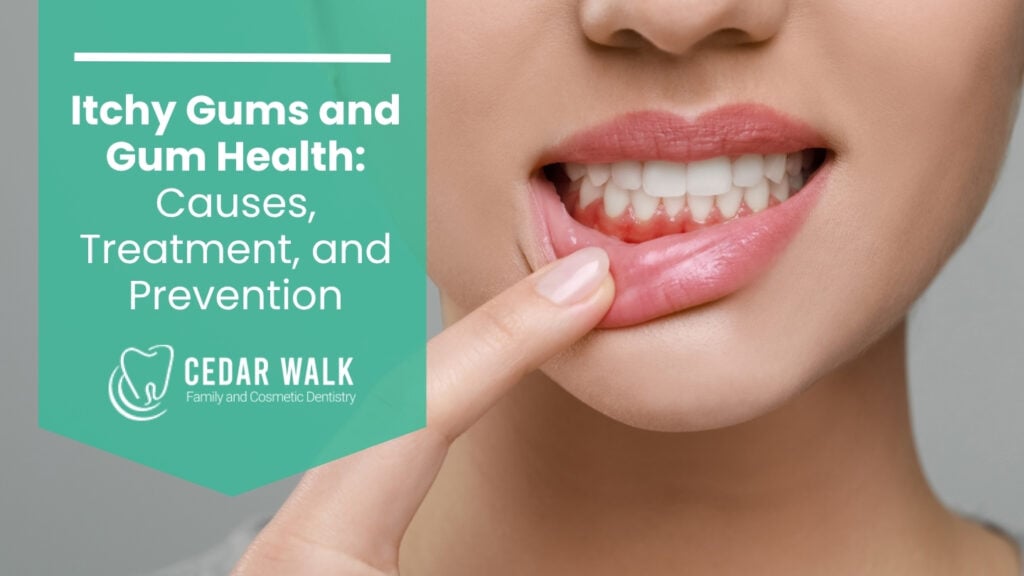
Why Gum Health Matters
Healthy gums protect your teeth and overall health. Gum disease (gingivitis and periodontitis) is one of the leading causes of adult tooth loss. It’s often painless in the early stages, but itching or bleeding can be the first signs of trouble.
Left untreated, gum disease can lead to tooth loss, jawbone damage, and has even been linked to systemic health issues like diabetes, heart disease, and stroke.
Causes of Itchy Gums
Itchy gums can have several sources:
1. Plaque and Tartar Buildup
Plaque is a sticky film of bacteria that produces acid when it interacts with sugars. If not removed, plaque hardens into tartar, irritating gums and leading to gingivitis. Only a dentist can remove tartar through professional cleaning or periodontal therapy.
2. Allergies
Oral allergy syndrome (OAS) can cause itching after eating raw fruits or vegetables. Seasonal allergies may also trigger gum irritation.
3. Hormonal Changes
Puberty, pregnancy, and menopause can make gums more sensitive, increasing risk of inflammation.
4. Dry Mouth
Caused by medications, dehydration, or medical conditions. Low saliva makes gums prone to irritation and infection.
5. Bruxism (Teeth Grinding)
Grinding wears teeth and stresses gums, leading to itching or discomfort. A custom nightguard can help protect your smile.
6. Healing or Injury
Small cuts from hard foods or mouth trauma may itch as they heal.
Warning Signs of Gum Disease
- Red, swollen, or tender gums
- Bleeding when brushing or flossing
- Persistent bad breath
- Gums pulling away from teeth
- Loose teeth or shifting bite
If you notice these symptoms, it may be more than an itch — it could be early gum disease.
Treatment & Relief
At-home steps to manage itchy gums include:
- Brushing twice daily with fluoride toothpaste
- Flossing once daily
- Rinsing with saltwater or antibacterial mouthwash
- Drinking water to combat dry mouth
- Taking antihistamines if caused by allergies
But if symptoms persist, see your dentist. Early intervention prevents progression to periodontitis and tooth loss.
Prevention: Protect Your Smile
- Brush and floss daily
- Keep up with family dentistry visits every 6 months
- Quit smoking, which slows gum healing
- Eat a balanced diet rich in vitamins and minerals
- Wear a nightguard if you grind your teeth
When to See a Dentist
Itchy gums that don’t improve with good hygiene could signal gum disease. Professional care — from dental cleanings to scaling and root planing — is the only way to stop tartar buildup and protect long-term oral health.
If you notice bleeding, swelling, persistent bad breath, or loose teeth, schedule an appointment right away.
Itchy Teeth vs. Itchy Gums: What’s the Difference?
If it feels like your teeth are itching rather than your gums, that’s actually a different—and fairly common—complaint. Teeth themselves don’t have nerve endings capable of producing an itch sensation, so “itchy teeth” is almost always one of a few things happening nearby:
- Referred gum inflammation. Irritated gum tissue right at the base of a tooth can feel like it’s coming from the tooth itself, especially along the gumline.
- Enamel wear or erosion. When enamel thins from acid exposure or aggressive brushing, the dentin beneath becomes more sensitive to temperature and pressure, which some people describe as an itchy or tingly sensation rather than pain.
- Teeth grinding (bruxism). Nighttime clenching puts repetitive pressure on the periodontal ligament—the tissue anchoring each tooth—which can produce a dull, itchy ache that’s most noticeable in the morning.
- Sinus pressure. The roots of your upper back teeth sit close to your sinus cavities, so sinus congestion or allergies can radiate as an itchy or achy sensation across several upper teeth at once.
If the itch is localized to one specific spot—say, right between two particular teeth—it’s worth checking your flossing technique before anything else. Trapped food debris or a small buildup of plaque in one tight contact point can create a pinpoint itch or irritation that clears up within a day or two of flossing that spot more thoroughly.
As with itchy gums, persistent itchy teeth that don’t resolve with better hygiene, a nightguard, or an antihistamine trial are worth bringing to your dentist—especially if it’s paired with sensitivity to hot or cold, since that combination often points to enamel wear that’s worth addressing before it progresses.
Protect Your Gum Health in Charlotte, NC
At Cedar Walk Family and Cosmetic Dentistry, our team provides preventive care, advanced gum treatments, and patient-focused guidance to keep your smile healthy.
Call us at (980) 351-3517 or request an appointment online today.
Practice Recognitions

Recent Posts
- How Long Does a Root Canal Last? Factors That Affect Longevity
- Invisalign Before Veneers or Whitening: Planning Your Smile Makeover in the Right Order
- Dental Cleaning vs. Deep Cleaning: What’s the Difference?
- Can You Whiten Sensitive Teeth? What You Should Know
- What Happens to Your Natural Teeth Under Veneers?
- Why Preventive Care Is the Foundation of Family Dentistry
- How to Decide Which Cosmetic Dental Treatment Is Right for You
- Why Seeing the Same Dentist Has Long-Term Benefits
- Root Canal Myths: Does It Hurt? What Modern Treatment Is Really Like
- What Makes Some Veneers Look More Natural Than Others